Restructuring the Way We Work
Over a decade, I transformed product at DonorsChoose from a reactive, ticket-driven function into a strategic, multidisciplinary organization. That meant hiring and developing the team, evolving its culture and practices, building support across the organization, and ultimately restructuring the work around empowered, audience-focused teams.
1 designer → 10-person team
Backlog → strategic roadmap
3 audience-focused product pods

My role
Product and organizational strategy, team building, people management, operating-model design, and executive alignment
Team
Led product, design, and UX research; partnered with engineering, operations, and executive leadership
The Challenge
What drew me to DonorsChoose 12 years ago was the rare mix of a mission I believed in, an airtight business model, and a team of smart, dedicated people. But what really caught my attention was that DonorsChoose was succeeding despite the product, not because of it. That gap felt like a huge opportunity for me to make a real impact. And when they hired me, the leadership team made it clear that they were ready to evolve.
Step One: Build Trust
I was excited to start improving things, but before jumping in with bold ideas, I knew I had to earn trust with my colleagues and collaborators. So I started paying down design debt with some low-stakes work that showed results quickly.
One of the most obvious early wins was an improvement to the checkout experience: conversion rates from cart to checkout were alarmingly low and customer support was fielding far too many help requests. The page was too complex, too confusing, and it was costing us donations (just look at the BEFORE screenshot below). Simplifying the flow and leaning on standard design patterns gave us quick, measurable wins and helped my colleagues trust my process.
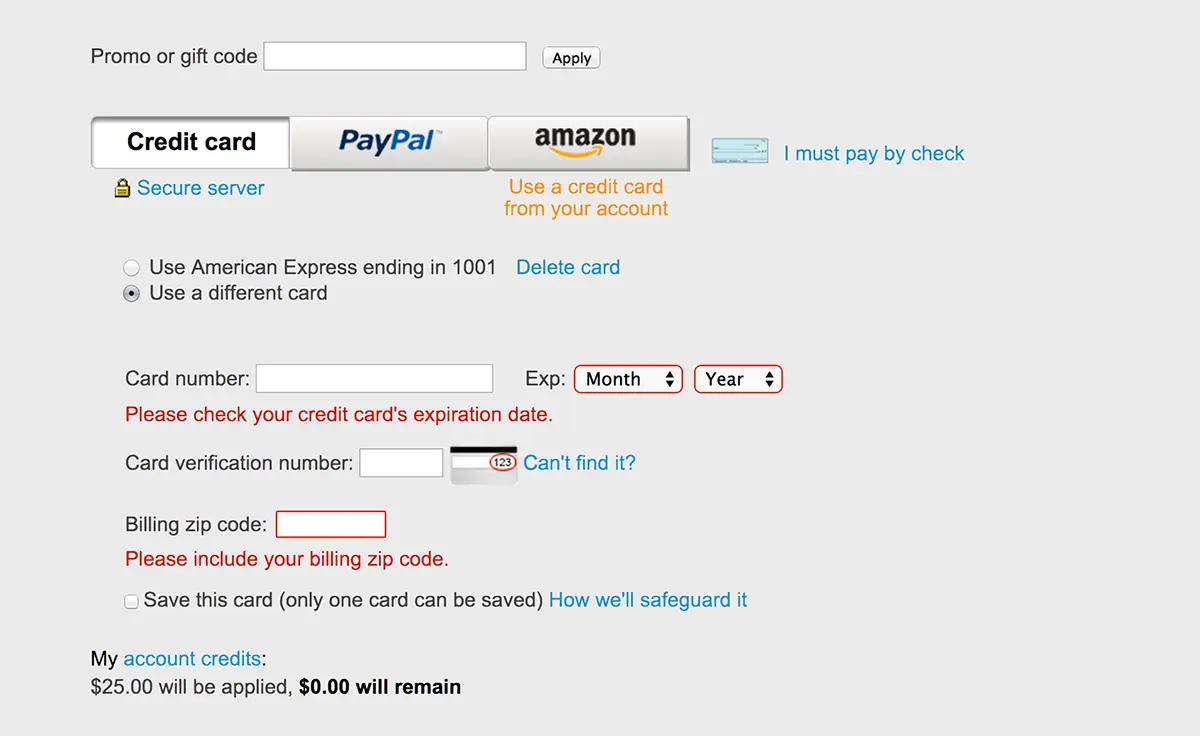
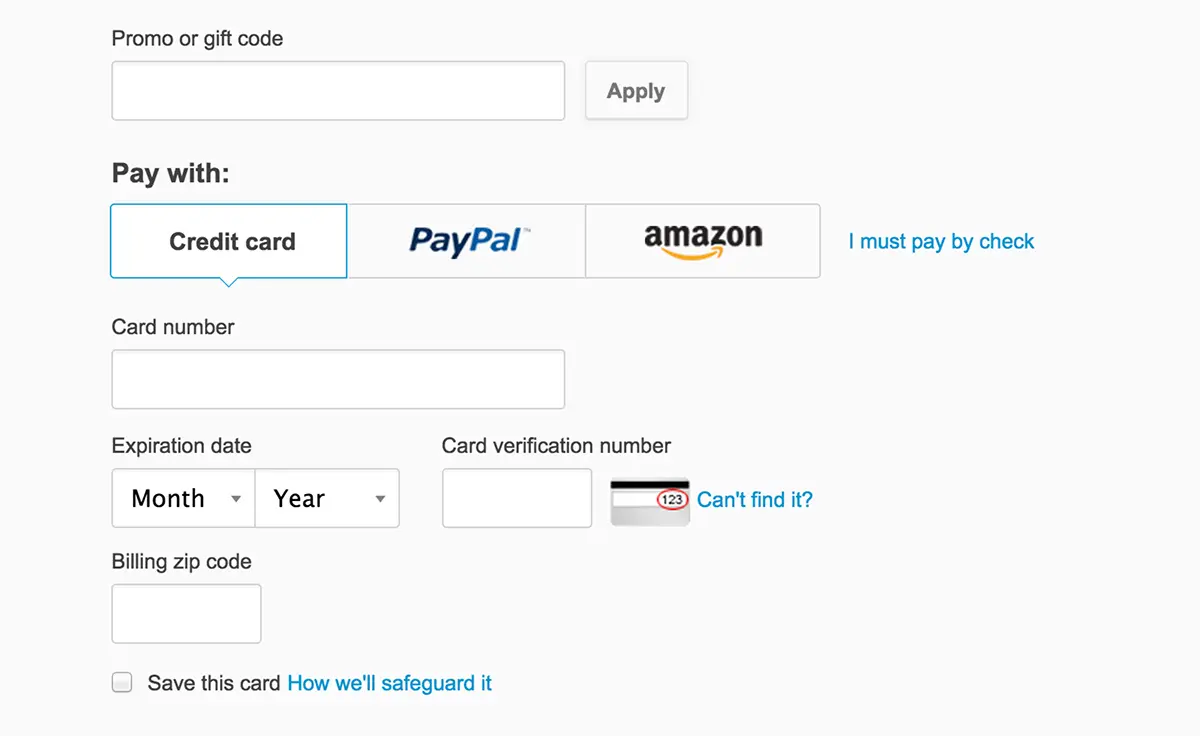
From there, I focused on a series of smaller, high-leverage projects to prove that disciplined analysis and thoughtful design could drive measurable improvements.
These included:
- Sitewide mobile design improvements
- A full redesign of the global navigation
- Targeted improvements to the sign-in flow
- Search enhancements to help donors more easily find relevant projects
- And, eventually, a redesign of the homepage
In each case, I used performance metrics and user feedback to make problems visible, bring partners into the decision-making process, and validate results. These wins built confidence in the approach and established design as a measurable driver of impact.
Where’s the Roadmap?
Before I joined the team, DonorsChoose didn’t have a roadmap. They had a giant backlog of tickets, mostly written by operations staff, with Product playing a middleman role: take the ticket, slap a UI on it, then pass it off to engineering. It was a very solutions-first approach that made it hard to be strategic and totally bypassed the expertise a product team could add.
To shift that mindset, I kept asking the same question whenever one of these highly prescriptive cases made it to the product team: “What problem are we trying to solve here?”
That helped at the individual project level, but it didn’t yet unlock a broader organizational strategy. To get there, I needed to get the team aligned around a roadmap.
Our first roadmap was a simple google spreadsheet. Its only purpose was to rank the highest priority work to get us on the right track. We reviewed it weekly with key product, engineering, and executive stakeholders. This process made it tangible, accessible, and pliable enough to re-adjust to the changing needs of the org. It was a huge success.
Give Teachers a First-Class Experience
One of the early LARGE projects on the roadmap was a way to address the “project page” where our teachers tell their stories and raise funds. It was large in scope because it was in need of more than a simple redesign. The content of the project page was the real problem—it didn’t effectively bring the classroom to life or inspire donors to want to open their wallets. That uninspiring content was a result of a clunky, overwhelming site experience that we were putting our teachers through.
Building an engaging teacher experience was never prioritized. After all, they were a captive audience: if they wanted classroom funding, they had to deal with the site, and all of the checkboxes we could throw at them! But that thinking led to an experience that felt more like a loan application than an invitation to tell your story.
We rethought the whole approach—how we onboarded teachers, how we guided them through storytelling, how we helped them put their best foot forward (read the next case study, linked below to learn more).
Then the Real Work Began
With the foundation in place, it was time to think long-term. We needed to understand our users. We needed structure. And we needed more people.
My first hire was a product designer. But it quickly became clear that the platform’s breadth and complexity were too much for such a small team. So we grew—slowly and intentionally.
We added another PM and another designer. When research became a bottleneck, we brought in a Research Ops specialist to keep things moving. Eventually, about 9 years in, we had scaled up to 3 PMs, 3 PDs, and 3 folks on UX research.
But you don't have to take my word for it...
“I grew considerably as a researcher under Dan, becoming more strategic, more focused, and more impactful. I’ve modeled much of my own management style after his.”
That was the moment to shift our structure. “Everyone works on everything” no longer made sense.
Instead, we created user-focused pods aligned to our three main audiences: donors, teachers, and corporate partners. Each pod included a PM, a designer, and a few engineers (including a tech lead). Our small research team remained a shared resource that helps out everywhere as needed.
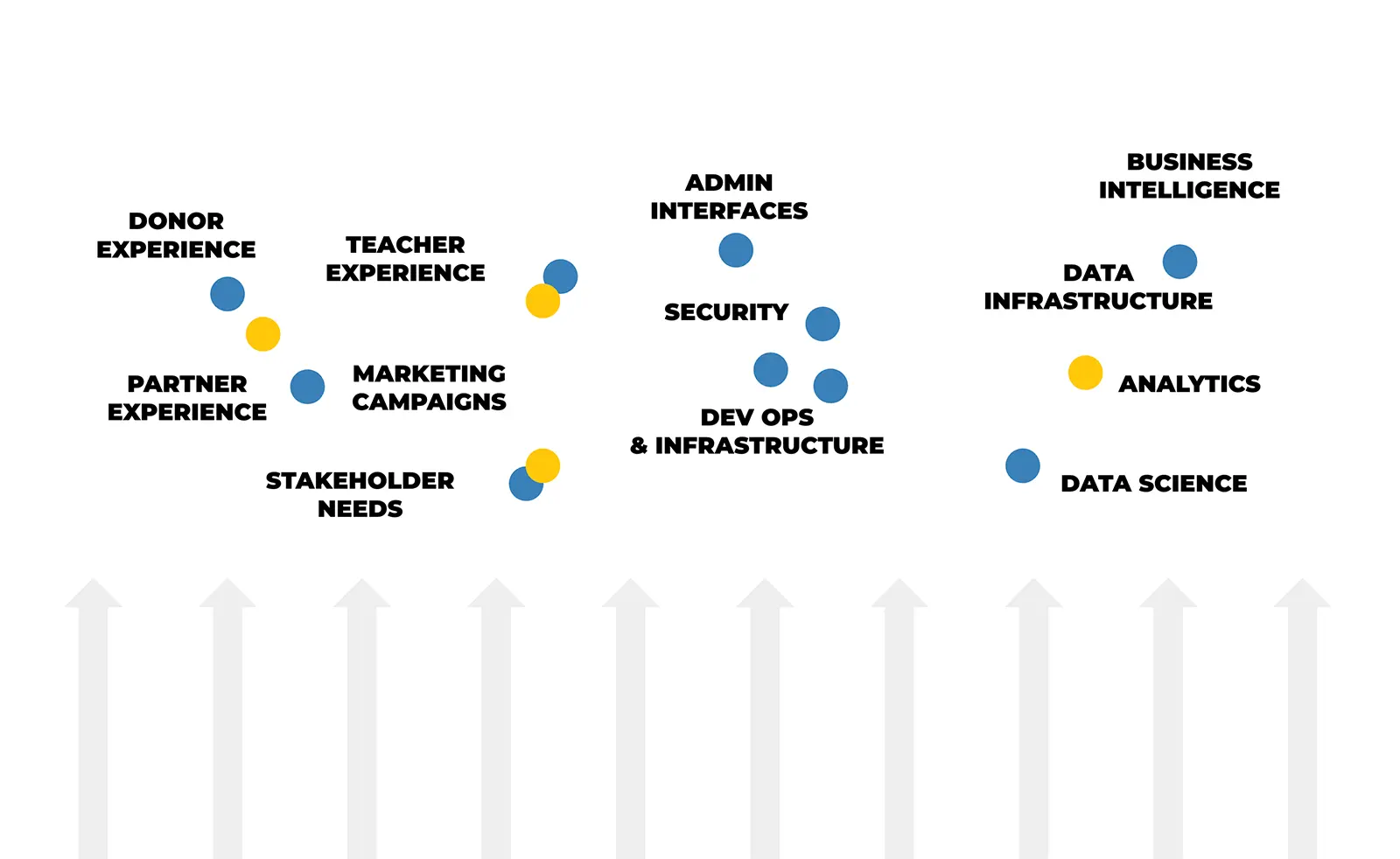
“Everybody works on everything” - slightly chaotic, but right for our small team of long-tenured team members.
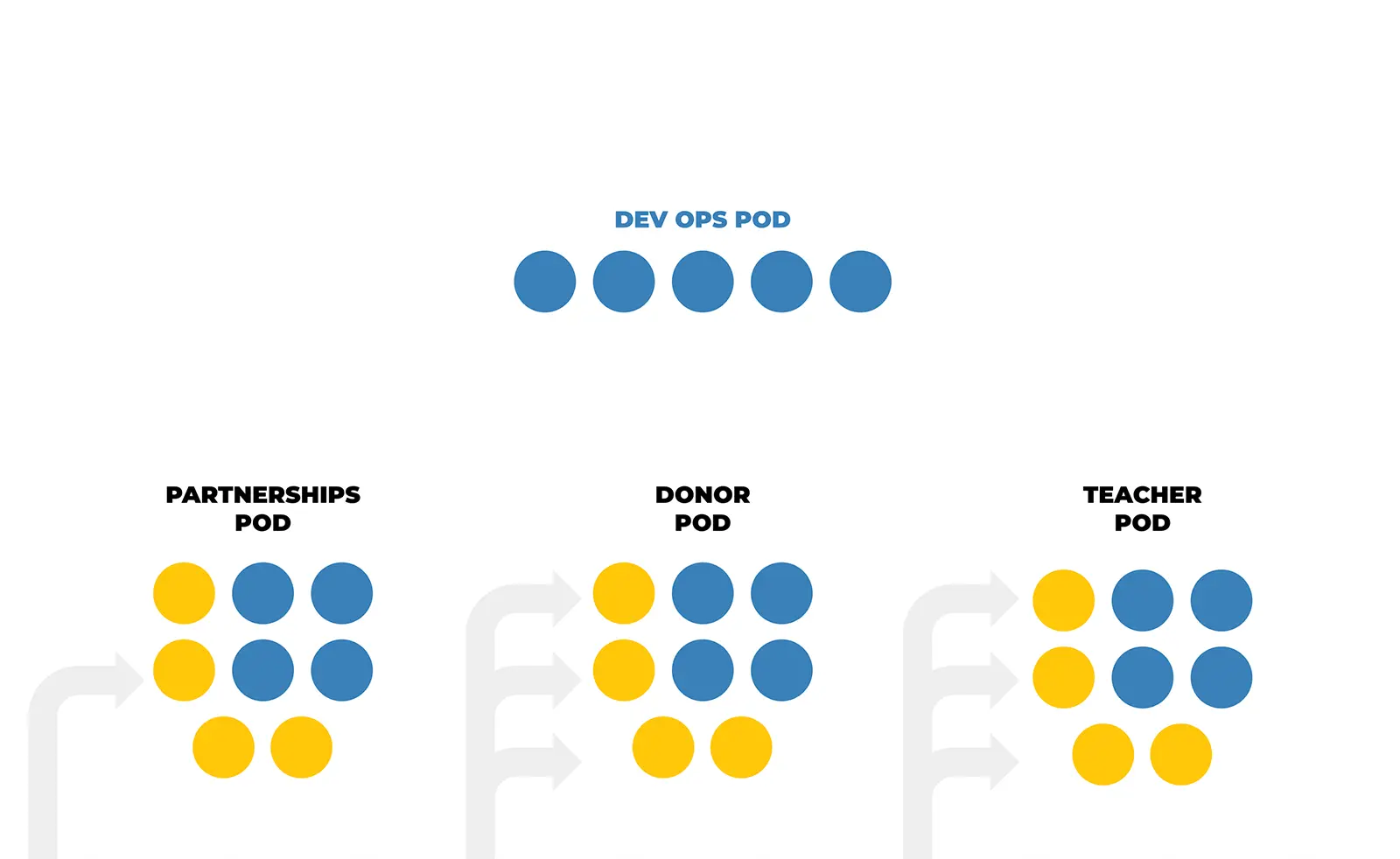
Streamlined pods, each group made up of engineers and product people serving a distinct user base.
Why the Pod Model Works for Us
This structure brought focus and clarity to our work. By aligning each pod around a specific user group, we enabled teams to develop deep expertise, manage stakeholder relationships more intentionally, and build and ship more complex features without constant context switching.
Over the following year and a half, the results became clear: teams felt more empowered, engaged, and equipped to prioritize effectively. That sense of ownership, driven by well-defined scope and autonomy, has translated into more targeted features, deeper team expertise, and improved user satisfaction.
But you don't have to take my word for it...
“Dan has a strong ability to identify opportunities to improve how teams operate, and together we helped evolve our organization by moving to a pod-based structure that strengthened cross-functional collaboration and execution.”
The Outcome
None of these changes were revolutionary on their own. There was no silver bullet, no flashy innovation moment. What it took was consistent, thoughtful work: understanding the organizational problems, designing the right structures, and sticking with it. I came in with a long term strategy, ready to make a plan and see it through. Over time, my role shifted from individual contributor to player-coach to full-time manager. Each step was intentional and paced to match the needs of the team and the moment.
The biggest lift was the people work. Getting folks out of their comfort zones, reshaping habits, and earning trust took time. Collaboration was everything. Without it, none of this would’ve stuck.
Next case study:
Great design is a team sport
Empowered teams deliver results. Want to build together? Reach out.